
How families travelling Australia handle their kids’ education and homeschooling — and how to work out which route suits yours.
Meg Wedding, @kindrednomad
“How do you educate your children whilst travelling?”
It’s the question we get asked more than any other. It’s usually the first one too, often before people have even settled on a van.
And the honest answer is that it’s not straightforward. Requirements vary from state to state, and there’s no federal home education legislation covering the whole country. Add in the fact that you won’t be in any one place for a set stretch of time, especially if you give up a permanent address, and it starts to get messy.
Read this bit first
Whatever you read here or anywhere else, check the current rules with the education department in your own state. They change, they differ, and the people at the department are the only ones who can tell you what applies to your family right now. There’s a list at the bottom of this page.
What we can do is lay out the three common routes families can take, and what each one feels like in practice.
What’s on this page
Before you panic
Beginning all this can seem daunting. It was for us, we’re not school teachers.
But think about it logically. We are teachers. We teach our children things every single day.
“I never let schooling get in the way of my education”
— Mark Twain
Worth remembering
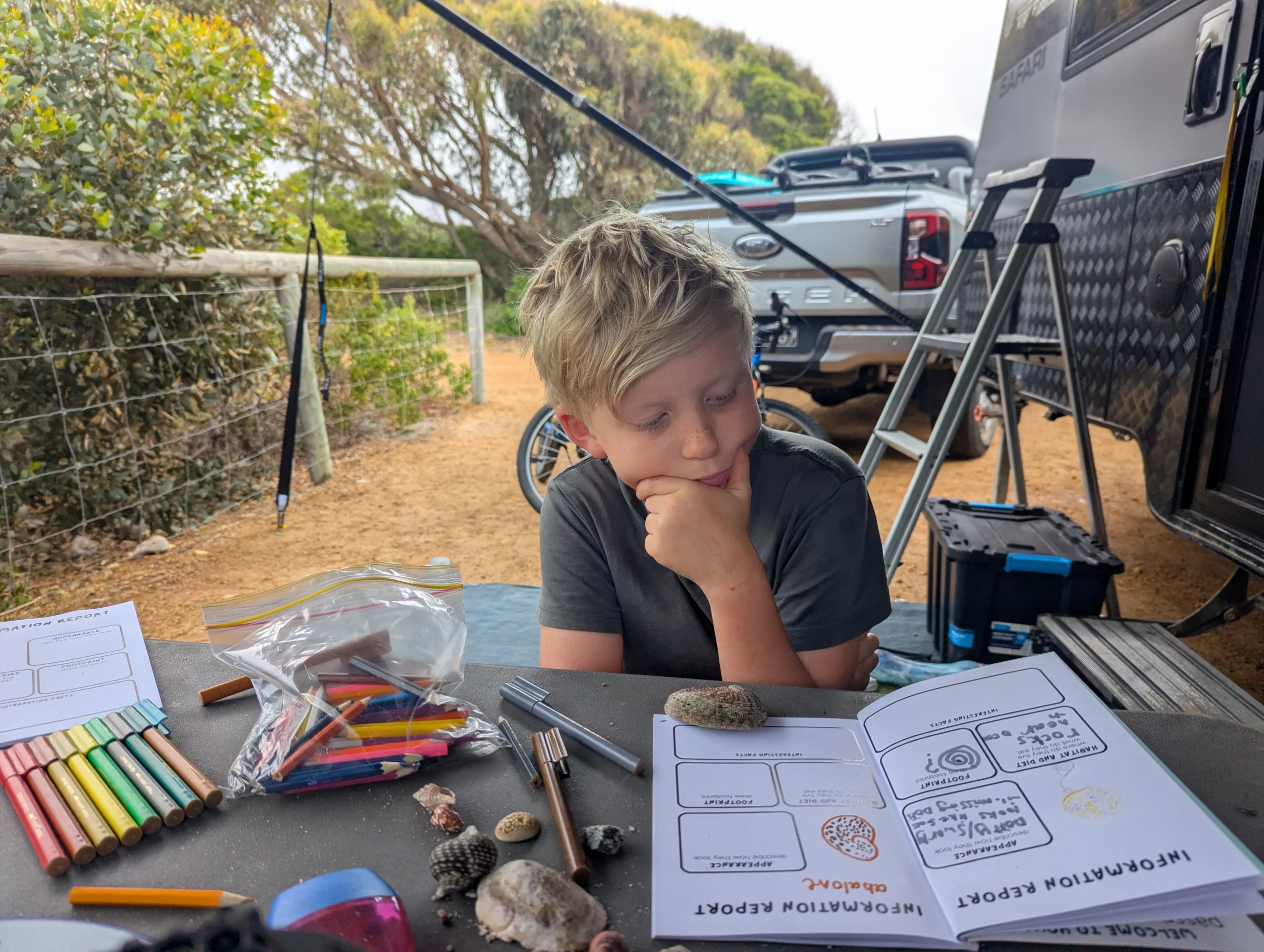
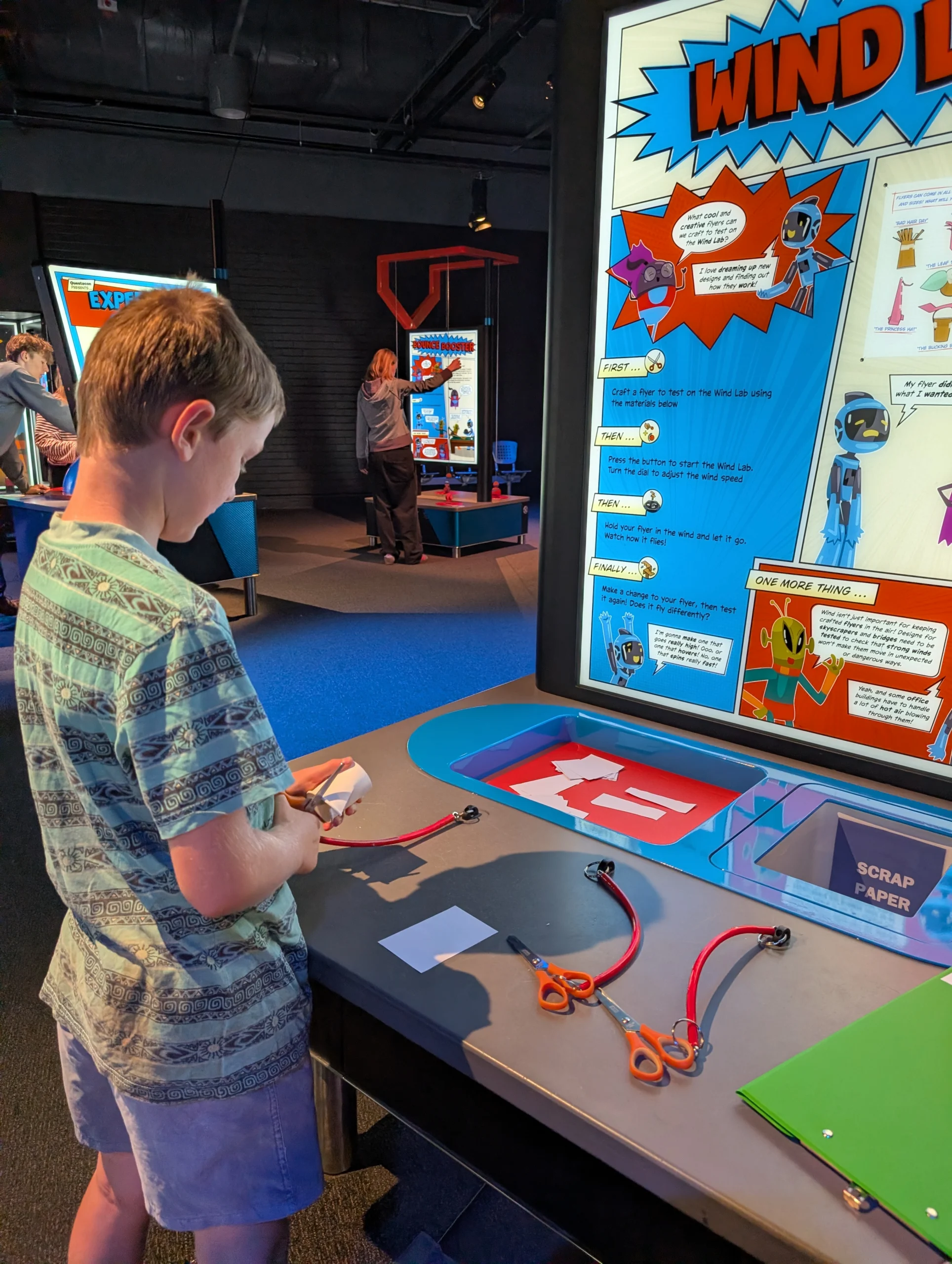
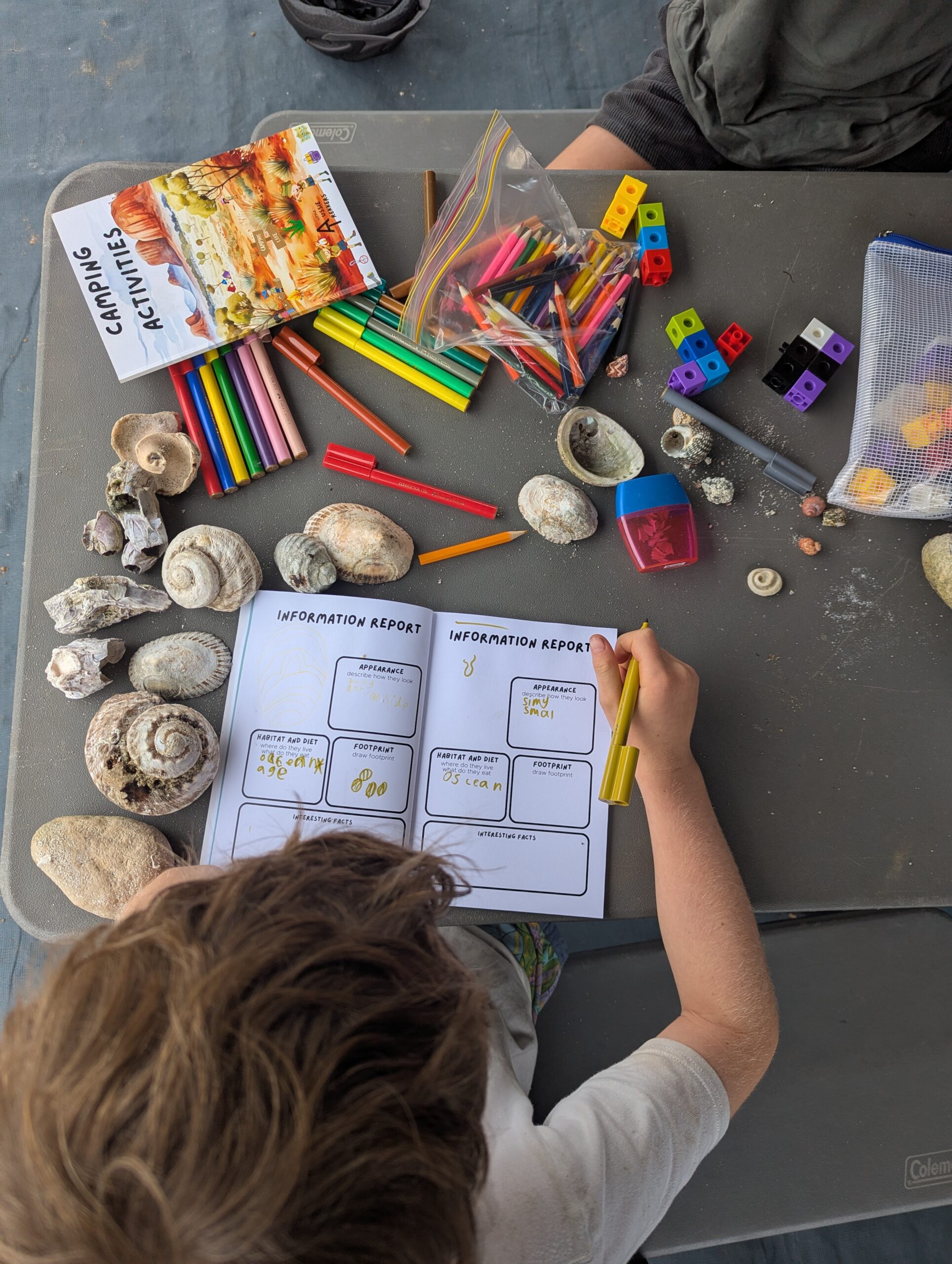
A lot of their education will come from the places you visit and the things you do. The formal side is only part of it. The gift you give them by travelling and learning along the way is invaluable.
There are opportunities everywhere once you start looking; mining towns, museums, aquariums, even the pamphlets from visitor centres. You can fold all of it into their world and they’ll learn without realising it.
The three routes
Option oneDistance Education
Different states run different versions, but they broadly offer the same thing — online lessons and communication, plus hard-copy work packages.
What’s good about it
It’s comprehensive and structured. The Distance Education school takes responsibility for your child’s learning and tells you how it works. They provide the timetable and the work; you oversee your child. You don’t have to plan lessons.
Packages get delivered to an address you nominate, your child completes the work, you send it back for marking. More of it is going online, which means fewer books to pack.
What’s hard about it
There’s a lot of it. It can feel like your child is still at school, except you also have to fit in the travelling and sightseeing, and there seems to be little time for both.
Then there’s the practical side. You might not know where you’ll be in two weeks to have a package delivered. You might be ready to move on but still waiting for one to arrive. Some remote areas have no postal service at all. And you may not have the internet access the digital programs assume.
That workload comes up again and again from families who’ve done it:
When Distance Ed quoted 5-6 hrs per day I decided this was not possible with travelling & exploring.
We left from Victoria last June and did Distance Education for 6 months, found most days an uphill battle, (and I’m a teacher)!
I find the DE workload unreasonable, especially the amount of English each day. Thankfully our assigned teacher is very understanding of our situation but I do still feel very stressed when I feel like I’m falling behind where we ‘should’ be.
But it’s genuinely not everyone’s experience, and the difference often comes down to the school and the teacher:
We have just enrolled with the Dubbo school of Dist. Ed. We spent half a day there and the girls will spend a week at the school during next term to get to know their teacher and other kids doing the program. The resources and support are amazing. We wish we had found it earlier. One teacher full time has max 14 students.
Distance education through Vic, they’ve been great… their teachers ring them every week and are always there if we need to call them. Daughter in year 11 had tutoring over the phone last week which was great, on so many levels. Not only is she learning her maths but she is talking to a complete stranger over the phone which is giving her more confidence.
DE have been so good that they have even told the girls to skip some weeks so they can catch up! They have been wonderful! And so helpful.
And one family made the point that how you start the conversation matters:
If we went again I’d be upfront and telling DE what we would be covering rather than trying to jam it all in.
Option twoRegister as a home educator
Here you register with the relevant body, which assesses your ability to educate your child, then monitors them, typically including visits.
What’s good about it
You can tailor your child’s education to them and their individual abilities. It’s far less structured than Distance Education, so you can adjust learning to suit where you are and what you’re doing.
What’s hard about it
You have to apply and demonstrate your commitment and ability, and you may not be approved. You need to source the material yourself and devise a study plan, which can be daunting.
And this is where it gets genuinely tricky for travellers, because registration processes tend to assume you’re staying put with a settled address, and being around for evaluation.
Valerie Marett, who was a registered teacher for decades and has run Homeschooling Supplies Australia since 1994, has watched families run into exactly this. Her observation, from years of fielding these questions, is that home education registration is built around a fixed address and periodic evaluation — neither of which fits a family moving around the country.
Border warning
Requirements aren’t portable. Cross a state border and you’re under a different set of rules.
We’re deliberately not spelling out what each state requires, because it changes. If this is the route you’re weighing up, ring your state’s department and ask them directly. We’ve experienced some states being more flexible than others, so your personal situation will influence the experience you have with homeschooling.
Option threeKeep your child enrolled and organise it yourself
If Distance Education feels too restricting, and registering as a home educator doesn’t fit because you’re only travelling for a set period, there’s a third path.
You talk to your child’s principal. You explain what you’re planning. If they’re satisfied you can provide a good education while you’re away, they may agree to an arrangement that keeps your child on the roll.
What’s good about it
You can tailor everything to your child. It’s flexible enough to bend around where you are and what you’re doing. And (not a small thing) you’re not waiting on the post or hunting for signal to get school done.
What’s hard about it
You source your own material and devise your own plan. And because you’re not answering to anyone, you need to be genuinely motivated and disciplined. It’s easy to let it slide.
Families who’ve taken this route describe a real range of arrangements:
The principal of the school (QLD) said that as long as we get the important stuff done they wouldn’t worry about the rest of it so much knowing that the kids would be learning so much on our travels.
We are only travelling for 4 months so our school has given us school books and a general guide as to what would be good to accomplish while we’re away.
We took maths text books with us and they both wrote in a journal everyday. The work we did everyday depended on how we all felt… It was a fantastic experience, the best decision we’ve ever made.
One family made the point that it can be worth persisting until you find the right person:
I think shop around and chat to different Principals until you find one who values what you are doing for your kids and is willing to be flexible.
What we did
We didn’t have a clue where to start, with two children in Years 3 and 5.
Our school was wonderfully supportive of the trip and helped us get going. But when we decided to extend our travels, we needed to enrol in homeschooling properly and that felt like a different proposition altogether.
There are some brilliant resources out there to help you plan, including partners of ours like Wild School Co. Buying a program to help us draft that first lesson plan made all the difference. It showed us what was actually required, and how much we could bend it to suit our family and the way we travel.
It was daunting at the start. But we ended up with a solid plan, and one built around our children’s strengths and interests, that told us exactly what to focus on.
Where to check the current rules
There’s no single national answer, so go to the source for your state:
Before you commit
Research, ask our community, and call your local state source and ask what your options are. Do that before you commit to anything.

 for Aussie families