
Real meals from real travelling families — what families actually eat on the road when you’ve got a small fridge, no supermarket for 400km and kids who want food.
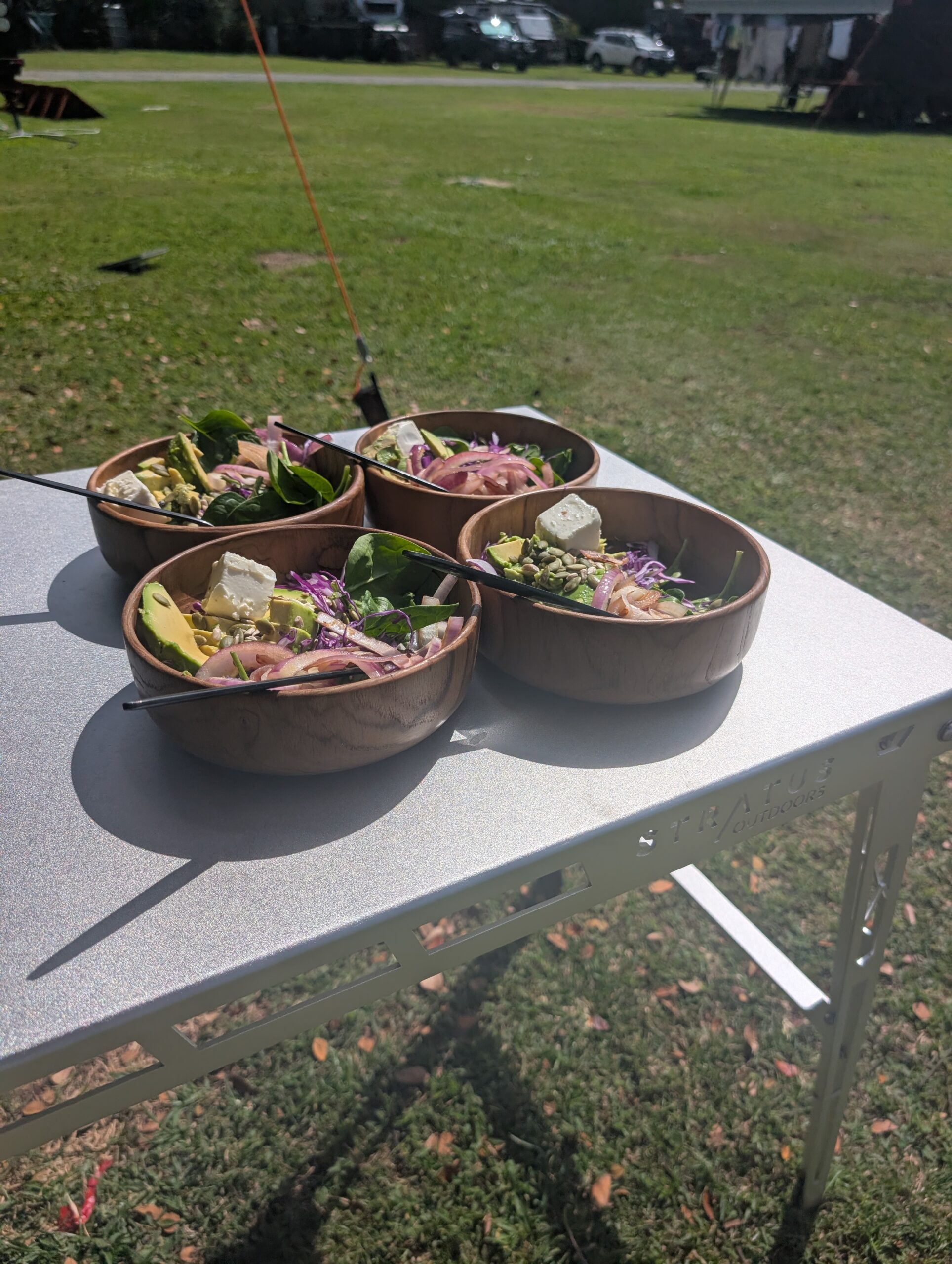
“What do families eat on the road?” is one of the questions we get asked most, and it’s a fair one. You won’t have much fridge space. You won’t be cooking elaborate meals. Sometimes you’ll be genuinely remote — and everyone still needs to be fed.
So we asked the TAWKers already out there. What came back wasn’t a recipe book. It was a system.
Here’s what actually works.
What’s on this page
The one thing everyone said: prep before you go
The families eating well on the road are the ones who did the work at home, weeks earlier.
The cryovac machine comes up more than anything else:
We had a cheap cryovac machine and made big batches of bolognaise, curried sausages, and meaty stews in a camp kitchen and divided it in the vacuum bags then stacked them on top of each other flat in the fridge. It was so easy to then reheat a fully cooked meal each night and they keep well as the air has been sucked out of them.
You don’t have to own one, either. Your butcher will do it for you. A lot of TAWKers have told us that when prepping for big road trips, like the Gibb River Road, the butchers in Kununurra and Broome will happily help you out with bulk orders and vacuum sealing.
We planned two weeks’ worth of meals for the Gibb (Kalumburu wasn’t open so we didn’t need more), and it made the trip so much more enjoyable being able to rely on it and having dinner sorted so we could spend all of our days out exploring.
Another family who did the Gibb with three kids aged 6, 4 and 2 backed it up: “definitely the cryo idea is well worth it! As the temps are constantly in the 30s. Keeping the meals sealed from leakages and away from bugs is great for peace of mind.”
It pays to prepare and take whatever dry goods you’ll need with you. I ran out of rice midway and a packet of microwave rice at one of the stations was $14. Safe to say we had pasta instead.
If you can’t get your hands on a vacuum sealer, ziplock bags do most of the same job, particularly if you’re going to freeze them anyway. Mince is a great staple — it stores flat in the freezer, thaws out quickly and can be made into so many different types of meals quickly.
Make sure the fridge doors are secured over the corrugations. Our freezer stash became missiles along the way! A child safe lock solved the problem once I realised.
Eat what you eat at home
This is the advice that saves both money and arguments, and it came up again and again.
You don’t become another person who eats entirely different food when you live on the road. So don’t try to change what works for you — eat the same way you would at home. If you can’t cook the same way on the road, you can adapt the recipes you love to work with what you have. We used a 12v slow cooker thermal pot for curries, stews and casseroles while we travelled, or when the sun was shining all day and I wanted to be at the beach instead of cooking.
It may take some flexibility and out of the box thinking, but the best part of being on the road is not being on a timeline. Draft a shopping list of staples that works for your family and keep the basics stocked up, so if you’re ever caught out you have options.
The variation on it, from a family who plans ahead: “I try to eat similar to home, but choose the less prep meals. I’ll do a quick meal plan before we go, grab all ingredients and try not to shop when we’re away, so budget is stuck to.”
The meals that come up over and over
Pulled straight from what TAWKers told us, these are the dinners that survive small fridges, camp kitchens and tired parents:
- One-pot pasta — mince and pasta sauce for spaghetti bolognaise. “We cook this, then add pasta and water as needed until the pasta cooks. All in one pot.”
- Curries — “a little chicken, sweet potato, zucchini or whatever plus tinned or bottled curry paste and tin coconut milk.”
- Chilli con carne — freezes brilliantly, and most parks have kitchens with microwaves.
- Stir fries — chicken breast sliced and vacuum sealed before freezing.
- Tuna mornay, fried rice, bacon carbonara, tacos, burritos and nachos.
- Instant noodle bowls — “Dried peas, corn, noodles plus a big tin of tuna make a quick meal.”
- Soup, bulked out — “Tin of vegi soup, then use 2 min noodles (or Angel hair pasta), then add what ever you can think of.” Or pasta with a can of pumpkin soup and whatever else you like.
- Slow cooker meals — “Make alot of slow cooker meals and freeze them. They defrost really well and can pack them full of vegies.”
- BBQ and salad — “most nights were just bbq meats and veg with salad. I took metal skewers to thread veggies onto, made cooking super easy.”
- Baked bean toasties — the honest back-up, as one family put it.
And the pre-made freezer stash, from a family who has it down to an art: “With dinners I always have a freezer stash in the van that I have pre made – lasagna, pasticcio, meat pie, chicken Kiev, chicken cordon bleu and I also pre make curry sauces and freeze in zip lock bags then all you have to do is cook your meat and vegetables.”
Lunches and driving days
The real trap is a quick stopover for fuel and a roadhouse lunch — and it’s where the money disappears. Every family who mentioned it said the same thing: make it, don’t buy it.
“Driving days make sure you make lunch and snacks instead of buying it, this is a big saving.”
Wraps are the near-universal answer, because they don’t need refrigerating and they don’t get squashed:
I have boiled eggs done and when we stop for a driving break we make salad wraps, with egg and aioli, pretty easy and an ok amount of veg. I just get out the picnic plates, lay a wrap on each one and cut and grate the toppings onto it. We usually stop at a playground to do it so kiddo burns off some energy while I’m making it. I keep all the salad stuff in a single clip lock box in the eski so I just grab that, the wraps, and the picnic set.
Beyond wraps: pita breads and mountain breads keep without freezing — pitas are great stuffed with meat or made into quick pizzas. Crackers, Cruskits and corn thins last far better than bread. Sandwiches made the night before while you’re cooking dinner mean no prep at all during the day.
One family made a point that’s about more than food: “We are also trying to not eat in the car. That way we make sure we stop for morning tea, lunch etc, and eat at those intervals to stop my boys endless grazing.”
And if you have the system for it, you can carry a small air fryer or oven to make your homemade lunch that little bit more indulgent.
The snacking is what gets you
As one TAWKer put it bluntly: “It’s the snacking that gets you if you have kids!”
What families make and carry: Anzac slice and bliss balls that don’t need the fridge, mixed dried fruit, muesli bars, nuts, jerky, and fresh fruit.
“I think the key is to just make it yourself, and take what food snacks from home you can, to avoid buying snacks or meals or the road.”
What survives without a fridge
Fridge space is the constraint on everything, so knowing what doesn’t need to go in is half the battle.
Vegetables that travel well
Onions, pumpkin, potatoes, sweet potato, garlic, cabbage and root vegetables generally. Carrots and zucchini should be eaten early. We highly recommend a Produce Pod to keep your veggies fresh for longer.
Fruit
“Oranges best fruit for bumpy roads.” Lemons and apples also last. Watermelon sounds like a good idea but takes up a heap of space in the fridge. Bananas don’t do well on the corrugations, so choose wisely depending on where you’re off to.
The pantry staples
Rice, pasta, pearl couscous, instant noodles (quicker to cook than rice or pasta), tinned tomatoes and passata, tinned tuna, chickpeas and beans for bulking out mince and curries, tinned soup, spaghetti and fruit for emergencies. Honey, peanut butter, Vegemite. Long life wraps and tortillas. And all of the basics like flour, sugar, yeast and baking powder if you’re off grid for a while and craving a treat.
Weetbix for breakfast
“Filling and compact to pack” — this one came up from several families. Cereal is fairly lightweight but bulky. We always carry oats: good for breakfast, cookies, or filling out a smoothie.
Powdered milk
The space-saver everyone raves about. “Powdered milk takes up less space than long life milk.” One family of five running a 50L fridge said it was “the only way we can have a 50 litre over something bigger.” It works well for porridge too, and saves the precious fresh milk for your coffee.
The one most people don’t realise
“Sauces like tomato sauce, mayo, asian sauces can all live out of the fridge which is another huge space saver which we didn’t know before this trip.”
Long life cream is good for carbonara. You can get shelf-stable salamis as well, and hard cheeses keep well in the fridge, particularly if they’ve been vacuum sealed — we buy a large block and separate it so nothing goes to waste. Spices, dried herbs, chilli and a squeeze of lemon do the heavy lifting on flavour when the ingredient list is short, and moving your spices into space-saving pockets or bags helps with both weight and storage.
Make your own bread
Several families do it, and it solves the fresh-bread problem entirely when you’re remote. Make your own in a camp oven — bread is literally water, salt, yeast and flour, all easy basics to keep on board.
A Weber works just as well — one family baked both bread and muffins in theirs across four weeks on the Gibb.
Choosing and packing the fridge
The fridge question is really two questions: what size, and what fits.
Measure the space first
This sounds obvious and catches people out:
If you have a space in your camper you have to make sure whatever you buy fits in. We usually have a Engel fridge/freezer in our car. Love it! We have a camper trailer and borrowed our friends fridge for the camper. Even though it was smaller, it was too tall for the space. Our Engel won’t fit.
Then the rest of it
- Separate lids beat one big lid. “I second any fridge/freezer where each compartment has its own lid. You can control the temperature better.”
- Two units is common. Plenty of families run a fridge/freezer in the camper or van and a second fridge in the car — 75L and 50L was one setup mentioned, with the car fridge doing freezer duty on bigger trips.
- Fill the gaps. A full freezer runs more efficiently, so as it empties, put a slab of water bottles in. You get colder running and cold drinking water out of the same trick.
- Pack in the order you’ll need it, and portion the meat into meal-sized amounts before it goes in — frozen by the butcher if you can manage it.
- Use a vented container as a crisper. “I have a large vent smart Tupperware container I use as a vegi crisper in the Engel. Vegies will stay fresh for weeks in there – just limited on room.” Broccoli boxes work for the same job.
Eat down, in order
If you’re heading somewhere genuinely remote, the sequencing matters as much as the shopping list.
Eat meat, vegetables and salad the first couple of days, then non perishables towards the end of the trip if you are going remote.
Fresh first, frozen second, tins last. One family described exactly that: “We had a lot of pasta and frozen vegi meals when we did the remote stuff. We used canned food towards the end of our remote stints when we were running out of other stuff.”
Will it cost more than at home?
Mostly no. Occasionally yes, and it’s worth being honest about that.
Most families told us groceries land roughly where they do at home. But one family who spent a lot of time in the NT and outback areas was frank:
I’m afraid our food expenses did go through the roof. 3 kids at home we spend $200 week on the road almost double $370. We spent a lot of time in NT and outback areas.
The way around it is the one the big-family cook gave us: buy as much as you can at the big shops, and avoid the little towns where things cost a fair bit more. Stock up before you head out, and stock up properly.
If you want to see where food sits against everything else in a travelling budget, we’ve broken down three families’ actual figures in how much it costs to travel Australia with kids.
What we’d say
Nobody out here is eating badly, and nobody is spending their afternoons cooking.
Do the work once, at home or on a reset day, with a meal plan and a freezer. Learn what doesn’t need refrigerating — it’s more than you think. Make lunches instead of buying them. Cook the same things you cook now, just with fewer steps.
And don’t overthink it. As one family summed the whole thing up:
Whatever you make at home can be made when away. We take a Weber, an air fryer and a gas cooktop away with us. Do some planning at home, prep some meals and away you go!
Got a meal that works brilliantly on the road? Tell us — we’ll add it to the list.


 for Aussie families