
What free camping actually means, what to take, and how to find the good spots.
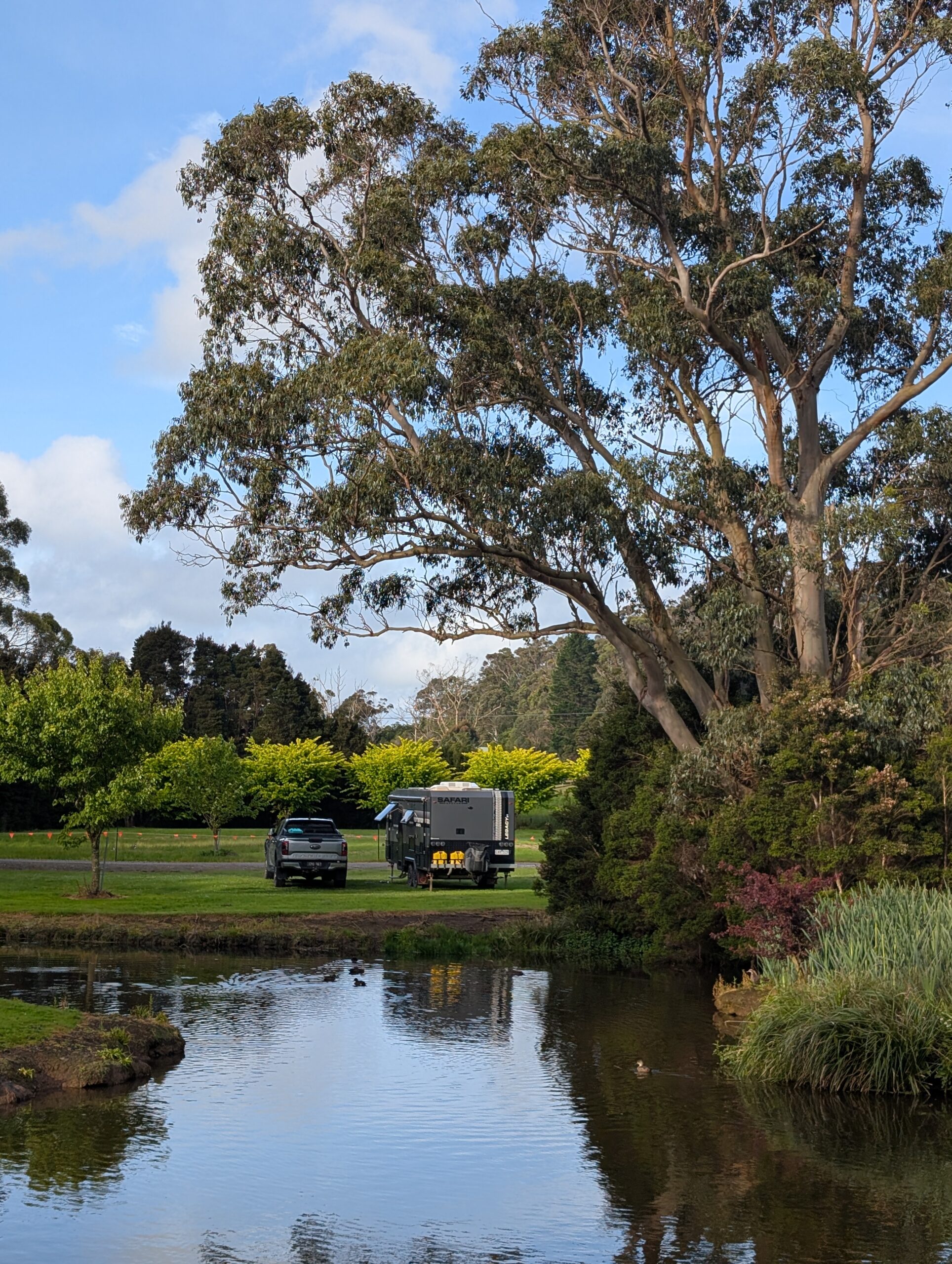
Finding good free camping is one of the best ways to see this country. You end up off the beaten track more often than not, with the place largely to yourself and a lot more of the natural surroundings than you’d get in a park.
At certain times of year you can have a campfire, which the children love. If there’s another family nearby, that’s your evening sorted — sitting around it swapping notes on where you’ve been.
And the money you save choosing a free camp over a caravan park could be what lets you keep travelling for longer.
What’s on this page
First, what “free camping” actually means
It doesn’t always mean free.
There may be a nominal fee, and some national parks require a permit depending on the state. What free camping really tends to mean is without power, water and general amenities. Many spots have a drop toilet — and there’s quite a range of those — while others have nothing at all.
Stay limits and booking
Every spot is different. Many of the ones along the highways have a 24-hour limit. Reserves and national parks usually allow longer.
Some can be booked, which is worth doing at peak times. Others are first in, best dressed.
If you’re travelling in school holidays, expect the good spots to be busy — plenty of families are having the same idea. You might need to book where that’s an option, or simply get in early.
You may be tempted to avoid those areas at those times. Worth weighing up, though: your kids may love the chance to find other children to play with. Life on the road doesn’t always throw up that opportunity.
Getting a spot
The grey nomads will often have arrived before you’ve even packed up from your last camp.
So if you’ve got your heart set on somewhere in particular, be organised and set off earlier than you normally would — especially if you want a good site rather than whatever’s left.
Be prepared
You need to be a bit more self-sufficient than you would be pulling into a caravan park. The big three differences are power, water and amenities.
Water
Never assume fresh water will be available. Carry enough drinking water for everyone regardless — given the distances you’ll cover out here, that’s not optional.
And be prepared for the occasional lick and a promise: wash the essential parts, promise to do it properly later.
Power and generators
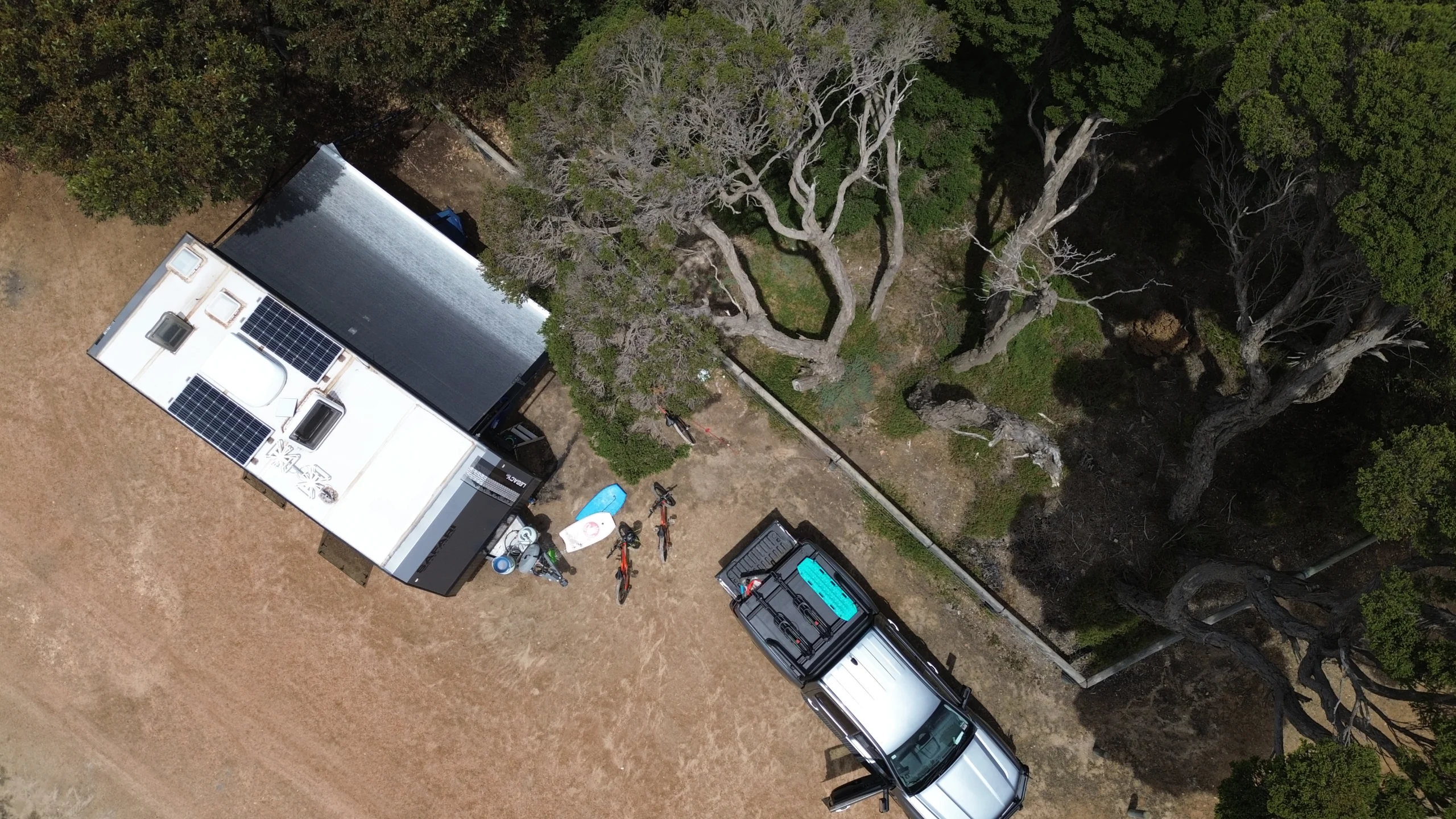
Generators aren’t the most popular item with fellow campers, particularly the grey nomads with modern vans that run everything off internal batteries. But if you can’t sustain power any other way, they’re a godsend — a chance to charge the devices, the DVD player, the iPads, before the next leg.
Just think of your neighbours. Run it only when you need it, and at reasonable hours.
A solar blanket or panel is worth considering as an alternative:
Better, and a lot quieter than a generator.
Toilets
Drop toilets have come a long way, and the newer ones really aren’t bad at all.
If your van hasn’t got a toilet, this is where a porta loo earns its keep — a walk to the drop loo in the middle of the night is a different proposition to a caravan park amenities block. Always carry plenty of toilet roll.
If you’re somewhere genuinely remote with no facilities, that’s what the spade is for. Bury waste at least 20cm deep and 100m from any waterway or campsite. And know where your nearest dump point is.
Campfires
Check locally whether fires are permitted at that time of year. This changes by state and by season, and it matters.
If they are allowed and you’re planning one, bring your own wood, matches — and marshmallows — rather than collecting at the spot, and certainly rather than damaging trees. In a national park you’ll generally be required to bring your own anyway.
A bit of planning is worth it. Sitting around a fire toasting marshmallows with your family, and maybe some new friends, is one of the good ones.
Rubbish
Carry rubbish bags. If there are no bins, or they’re overflowing, take it with you.
Leave the spot cleaner than you found it. And don’t leave rubbish outside the van overnight — the wildlife will find it.
Finding the spots
WikiCamps Australia is pretty much a must-have app out here. It works on your phone or your computer, and it’ll use your GPS to find the nearest options to you.
The filters are the useful bit. You can narrow by what you’ll pay, whether there’s power, water, ablutions, whether the dog can come — and, if you’re homeschooling, whether there’s wi-fi.
TAWK is one of the filters, which makes it much easier to find the partner parks offering free camping for the kids. Scroll through until you see the TAWK logo.
WikiCamps is user-generated. That’s mostly a strength — the photos and comments from other campers tell you far more than an official listing ever would. But information can be out of date, or come from someone having a bad day, or from the site itself. Use your common sense and do a bit of your own checking before you commit to a long drive.
Check before you go
Fees, stay limits, booking requirements, fire restrictions and access all change — sometimes seasonally, sometimes at short notice. What was a free 72-hour camp last year might not be this year.
Check with the relevant state park or land management authority before you head out, particularly for national parks and anywhere remote.
Where to next
Once you know how it works, the question becomes where.
Our free camping recommendations page has spots shared by TAWK families right around the country, sorted by state — beachfront camps, shady riverside spots, bush camps and good overnight stops. Every one of them was somewhere a travelling family actually stayed and thought was worth passing on.
And if you find a good one, tell us. That page only exists because families kept sharing.


 for Aussie families