
The decisions that actually matter before you go — when to leave, what to live in, and whether you can afford it.
Planning the big lap is the best thing, the worst thing, the most confusing thing and the most necessary thing, all at once.
Don’t forget the biggest decision has already been made. You’re going. Everything below is just working out the how.
You’ll have more questions than answers for a while. That’s normal. Here’s the order we’d tackle them in.
The six decisions
1. When should you go?
The obvious answer is now.
Beyond that it’s personal — it depends on how long you intend to travel, and on your kids. But here’s how the ages tend to play out.
Before school
Removes the schooling question entirely. The flip side is whether they’ll remember much of it. Little ones can be wonderfully easy at this stage, and also quite demanding — and it’s worth being realistic about how much trekking you’d genuinely manage.
Primary aged
The sweet spot for a lot of families. Schooling is manageable, there are no major exams hanging over anyone, and there’s an enormous amount they’ll be learning about in class anyway that they can simply go and stand in front of instead. They also still want to be with you, which won’t last forever.
Teenagers
Look like the hard option. The schooling is more serious, exams matter, and they won’t want to be away from their friends. But that can be exactly the reason to go. The teenagers we’ve known who travelled fought it at first, then really embraced the freedom they found without social media in their pocket.
There will always be a reason if you look hard enough — so don’t look.
2. Schooling
Don’t let this put you off. It’s the question we’re asked more than any other, and it has more answers than people expect.
You’re most likely not a school teacher. Neither were we. With a bit of discipline and routine it turns out to be one of the most rewarding parts of the whole thing — and on the days when nobody can focus, you close the books and go exploring instead. That’s still educating, just differently.
We’ve written about this properly elsewhere: your three options for schooling on the road, and how it actually works day to day.
3. What will you live in?
This is one of the bigger ones. Three things to weigh up.
Space
Room to pack what you need, room to move about in your living area, and decent sleeping space. Work out how much you actually need before you fall in love with something.
Simplicity
After a long day driving, do you want to spend the next hour setting up your home? A full van is quicker to set up than the more aerodynamic pop-tops and pop-outs — but the latter are cheaper to tow.
Cost
How much do you want to spend? And does it need to be new, or would something previously loved do the job?
Caravan
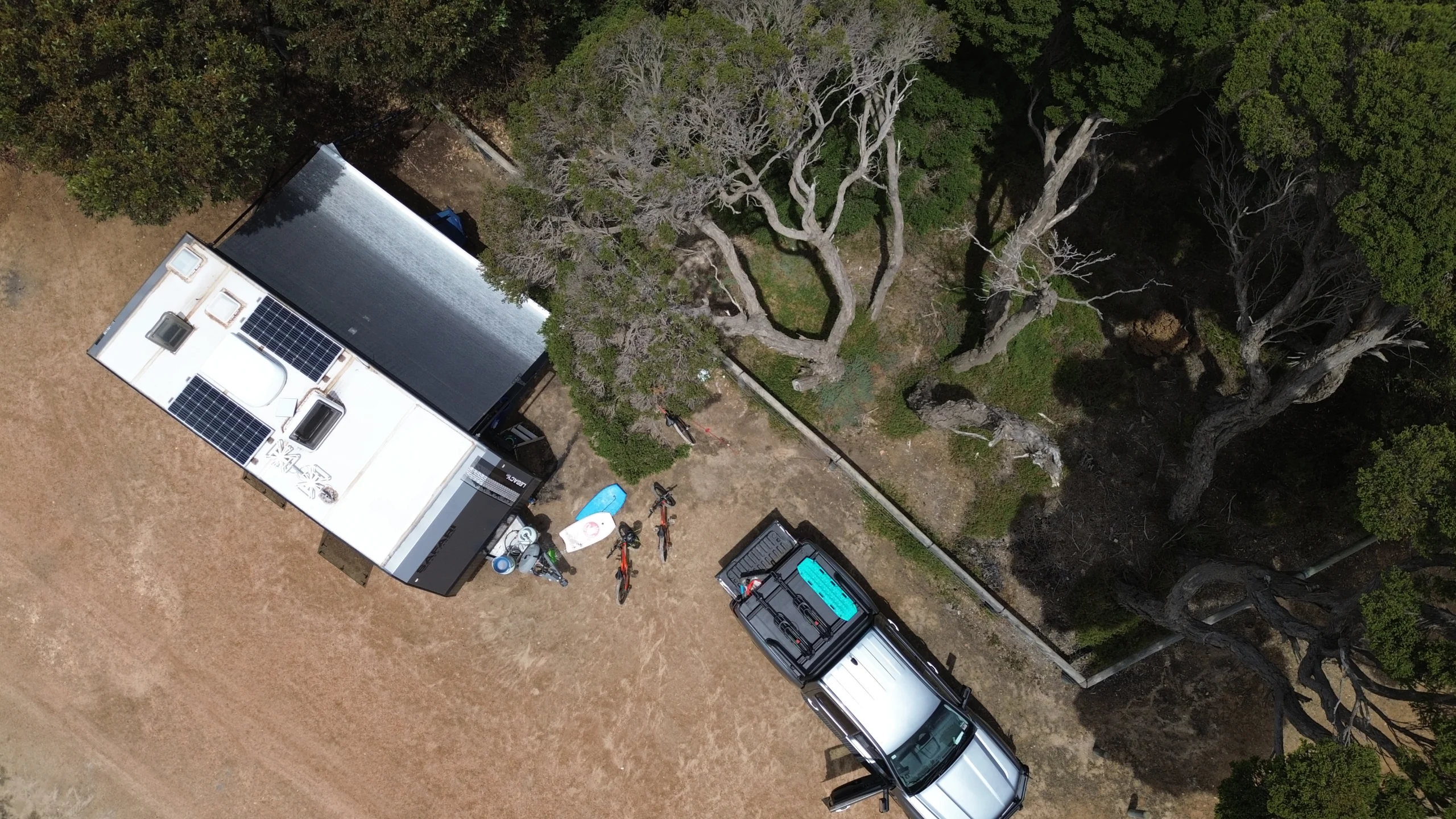
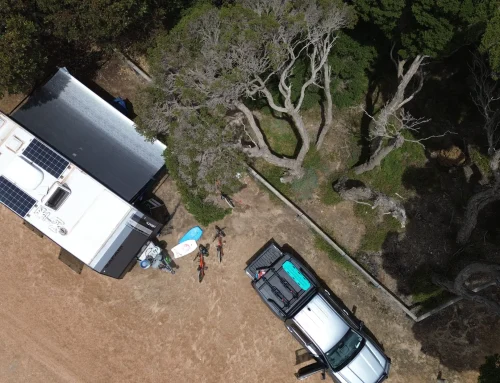
Probably the most popular choice — which then raises the question of which type. Full vans, pop tops, pop outs, and plenty in between.
The most important thing here isn’t the van at all. It’s your tow vehicle. Whatever you buy must be able to be safely and legally towed by what you drive. More on that below, because it matters more than anything else on this page.
Camper trailer or tent
A tent has a major advantage on space, and a major disadvantage on space, depending which way you look at it.
We didn’t see many families take that option. We saw plenty taking a camper trailer, and honestly, give one serious consideration. You can take them almost anywhere, they’re easy to tow, and while setting up takes noticeably longer than a caravan, you get used to it and it becomes second nature.
If you’re planning to get into Australia’s more remote corners but still want a kitchen, a camper trailer might be your answer.
4. The tow vehicle — this is the safety one
Your vehicle has to be legally and safely capable of towing what’s behind it. This isn’t the section to skim.
It’s in the manufacturer’s handbook. But understand what that figure means: it’s the caravan fully loaded and ready to go.
There’s no point collecting the van, running it over a weigh bridge empty, deciding you’re fine, and then packing all your gear into it. And remember that when you’re remote you’ll be filling the water tanks too — that’s serious additional weight.
The best thing you can do is talk to a towing equipment specialist who can advise on your specific vehicle and van combination.
You’re about to cover enormous distances, and there’s every chance you’ll go off road at some point.
We watched family after family changing tyres on the Gibb River Road. Some twice. Put real time and effort into choosing good tyres for both the vehicle and the van — it’s one of those costs that looks avoidable right up until it isn’t.
5. Can we afford it?
Will you ever really be able to afford it? Sometimes you just have to work with what you’ve got.
You do not need the brand new off-road van. Plenty of families are out there right now in something old and cheap that got them exactly as far as the expensive one would have. Some work along the way to top up the funds. That’s a completely normal way to do this.
It is scary. It can be genuinely hard to believe it’s possible. But the hardest part is making the decision — once that’s done, the rest tends to fall into place.
Two things that help: our travel budget tips, and a travel finance tracker so you can actually see where the money is going and where you stand.
6. Before you leave: do a first aid course
This is the one people put off. You may be a very long way from help. You never know when you’ll need to administer first aid — from a snake bite to being caught up in an accident. Knowing what to do gives you peace of mind, and could save a life.
There are courses specifically in remote area first aid, which are worth looking at if you’re heading properly off the beaten track. St John Ambulance Australia run courses around the country.
And once you’ve done the course, put together a proper kit to go with it.
The short version
Pick your window based on your kids, not on the perfect moment — it doesn’t exist. Sort the schooling, because it’s more flexible than it looks. Choose the rig around space, setup time and budget, then make absolutely sure your vehicle can tow it safely. Spend money on tyres. Do the first aid course.
Then go.



 for Aussie families